

Rotogravure Printing Ink in India: Applications, Performance, and Industry Trends
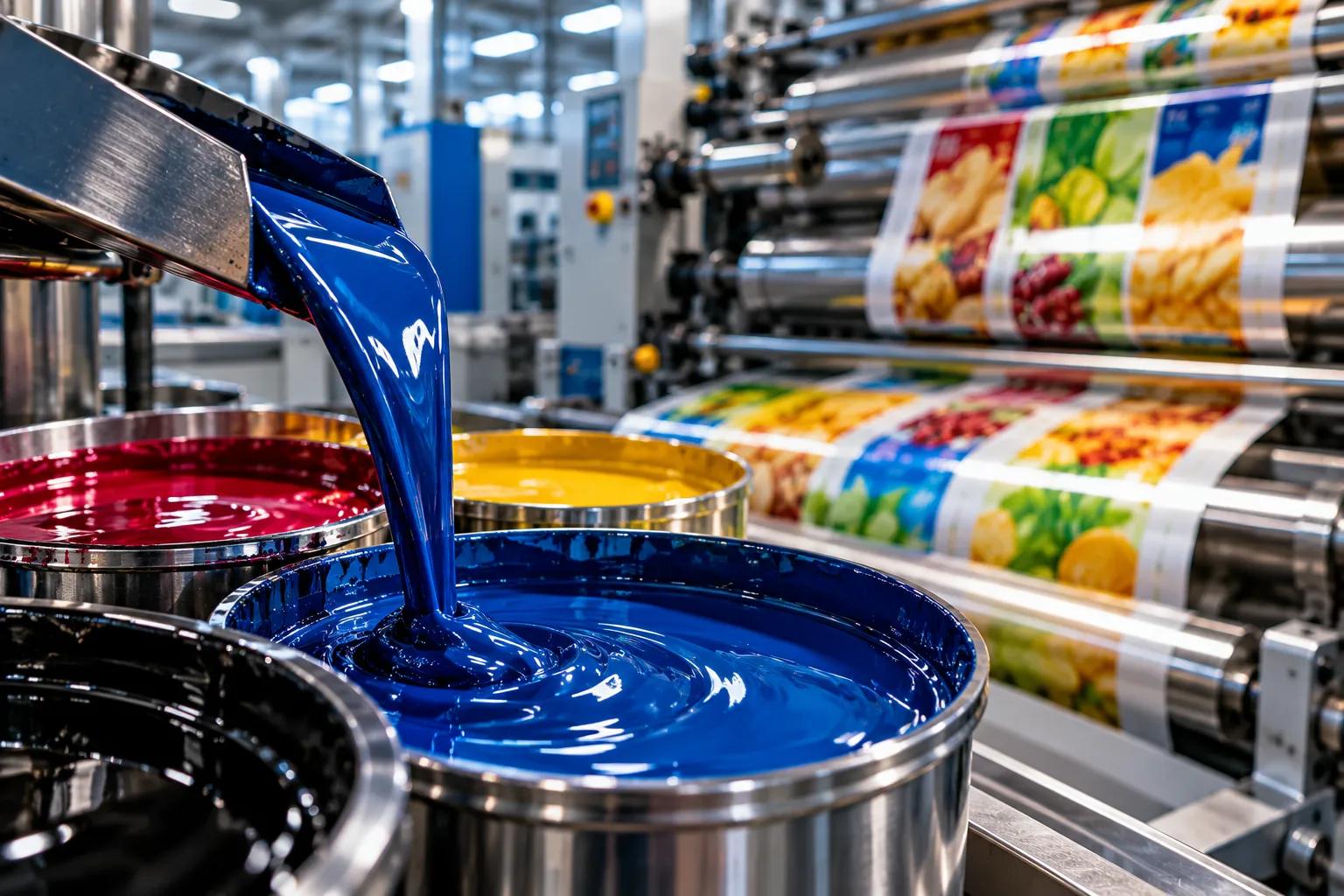
Rotogravure Printing Ink for Consistent Packaging Quality
The printing and packaging industry is continuously adapting to changing market demands, new materials, and evolving production technologies. Businesses today require printing solutions that deliver consistent colours, sharp graphics, and reliable performance across different packaging applications. Rotogravure printing has established an important place in this industry due to its ability to produce detailed images and maintain uniform quality during large production runs.
Ink formulation plays a central role in achieving these results. From viscosity control to drying speed and substrate compatibility, several technical factors influence the performance of printed materials. Understanding the applications and characteristics of rotogravure printing ink in India helps manufacturers and printers select suitable solutions for their specific production requirements.
Understanding Rotogravure Printing Technology
Rotogravure is an intaglio printing process that uses engraved cylinders to transfer ink onto a substrate. The engraved cells hold a controlled quantity of ink, which is transferred to the printing surface to reproduce text, images, and detailed designs.
This process is widely used in high-volume printing because it offers consistent image reproduction and supports extended production runs. It is particularly relevant to flexible packaging, where uniform colour coverage and clear graphics are essential.
The ink used in this process must be formulated to work effectively with the printing cylinder, substrate, and machine conditions. Suitable flow properties, controlled drying, and reliable adhesion all contribute to consistent printing results.
Major Applications of Rotogravure Printing Ink
Rotogravure printing serves multiple industries where print quality and production consistency are important.
1. Flexible Packaging
Food wrappers, snack packets, pouches, and laminated films are common applications. These materials require clear graphics, consistent colour reproduction, and suitable ink adhesion to maintain their appearance during handling and storage.
2. Labels and Product Packaging
Labels and printed packaging often include detailed designs, product information, and brand colours. Rotogravure printing supports the reproduction of fine details and uniform colour coverage across large quantities.
3. Paper-Based Materials
Selected paper products use gravure printing for decorative designs, printed surfaces, and other applications requiring consistent image quality. Ink selection depends on the paper grade and intended finish.
4. Decorative and Industrial Printing
Rotogravure is also used for decorative surfaces and industrial packaging materials. The ink formulation must meet the specific requirements of the substrate and the conditions under which the printed material will be used.
Key Performance Characteristics of Rotogravure Ink
The quality of printed output depends on several important ink properties.
Colour Consistency: Uniform colour reproduction helps maintain the intended appearance across different production batches.
Viscosity Control: Suitable viscosity supports smooth ink transfer and consistent coverage.
Drying Behaviour: Balanced drying characteristics help minimise smudging, blocking, and other printing defects.
Adhesion: Appropriate adhesion helps printed layers remain attached to the substrate during handling and further processing.
Ink Transfer: Proper flow properties support effective transfer from engraved cylinders to the printing surface.
Substrate Compatibility: Formulations must be suitable for the material being printed to achieve the desired results.
Monitoring these characteristics throughout production helps maintain print quality and supports efficient operations.
Industry Trends Shaping Rotogravure Printing
The printing industry continues to respond to changing packaging requirements and manufacturing practices. Several developments are influencing ink formulation and selection.
Growing Demand for Flexible Packaging: Lightweight and adaptable packaging formats continue to create demand for printing solutions that provide consistent quality across different film structures.
Greater Focus on Process Efficiency: Printers are paying close attention to ink transfer, drying behaviour, and viscosity control to support stable production and minimise avoidable defects.
Evolving Material Requirements: New substrate combinations and multilayer packaging structures require careful evaluation of ink compatibility and adhesion.
Quality and Consistency Expectations: Packaging manufacturers increasingly focus on maintaining uniform colours and clear graphics across repeat orders and extended production runs.
These developments make formulation consistency and technical compatibility important considerations for ink manufacturers and printing businesses.
The Role of Ink Manufacturers
Ink manufacturers contribute to the printing industry through formulation development, raw material selection, quality control, and technical support. Their work helps address the specific requirements of different printing processes and substrates.
Spectra Inks & Coatings Pvt Ltd focuses on printing ink solutions for rotogravure and flexographic applications. Consistent formulation and an understanding of printing requirements are important aspects of supporting modern packaging operations.
Collaboration between printers and ink manufacturers can help identify suitable formulations, evaluate production challenges, and maintain reliable printing conditions. Clear communication about substrate type, machine settings, and finishing processes can also support better ink selection.
Conclusion
Rotogravure printing continues to serve a wide range of packaging and industrial applications through its ability to deliver detailed images, consistent colours, and reliable performance in high-volume production. Its effectiveness depends on the combined influence of ink formulation, substrate properties, and printing conditions.
Understanding the applications and performance characteristics of rotogravure printing ink in India allows businesses to make informed decisions about their printing requirements. By focusing on suitable ink selection, process control, and formulation consistency, manufacturers can support dependable print quality while adapting to the changing needs of the packaging industry.