

Solvent Based Printing Inks in India: Performance, Applications and Selection Guide
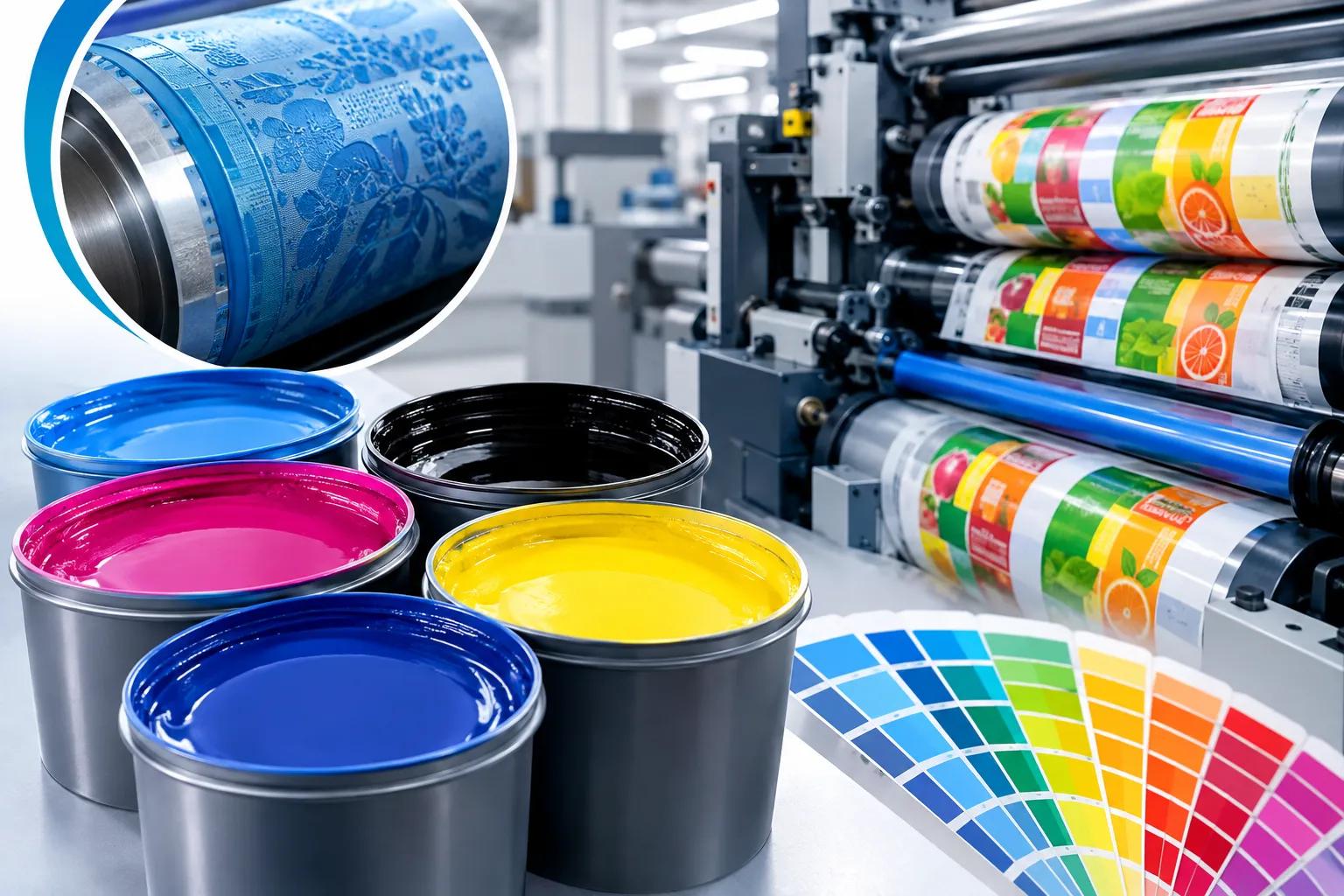
Solvent Based Printing Inks
The printing and packaging industry requires ink solutions that can deliver consistent results across different substrates, printing machines, and production conditions. As flexible packaging continues to use films and other non-absorbent materials, selecting the right ink becomes an important part of maintaining print quality. Solvent based printing inks in India are widely used in applications where properties such as adhesion, drying, colour strength, and printability are important.
Understanding how these inks work, where they are used, and what factors should be considered during selection can help printers and packaging converters make suitable choices for their production requirements.
What Are Solvent Based Printing Inks?
Solvent based printing inks are formulated using pigments, resins, solvents, and various additives. The solvent acts as a carrier that helps maintain the required viscosity and allows the ink to transfer effectively onto the printing substrate.
Once the ink is transferred, the solvent evaporates through the drying process, leaving the pigment and resin on the printed surface. The exact formulation can vary according to the printing process, substrate, colour requirements, and end-use application.
These inks are commonly associated with rotogravure and flexographic printing, particularly for applications involving flexible packaging and films.
Performance Characteristics of Solvent Based Inks
Ink performance depends on several properties working together. A suitable formulation should provide predictable behaviour during printing while meeting the requirements of the finished product.
Adhesion
Adhesion is an important consideration when printing on smooth and non-porous substrates. The ink needs to establish a suitable bond with the surface to help maintain print integrity during handling and subsequent packaging processes.
Drying
High-speed printing requires efficient drying between printing stations and before further processing. Solvent evaporation allows these inks to dry relatively quickly when the solvent system and drying conditions are properly matched.
Colour Strength
Strong and consistent colour reproduction is important for packaging graphics and product identification. Pigment selection, dispersion quality, and formulation control can influence colour strength and appearance.
Ink Transfer
Good flow and controlled viscosity contribute to efficient ink transfer. This can help produce even coverage and accurate reproduction of text, graphics, and fine details.
Applications of Solvent Based Printing Inks
The use of solvent based printing inks in India extends across several printing applications.
Flexible Packaging
Flexible packaging is one of the major application areas. Pouches, wrappers, sachets, and other packaging formats may use substrates such as PET, BOPP, PE, and other films.
Because these materials have different surface properties, ink selection needs to consider adhesion, wetting, drying, and the intended end use.
Rotogravure Printing
Rotogravure printing is commonly used for high-volume packaging production. Engraved cylinders transfer controlled quantities of ink to the substrate, making ink viscosity and transfer properties particularly important.
A stable ink system can support consistent colour, coverage, and detail reproduction during long production runs.
Flexographic Printing
Flexographic printing is used across packaging and other applications. Solvent based formulations can be designed for specific flexographic press configurations and substrates.
Factors such as anilox specifications, printing speed, viscosity, drying capacity, and substrate characteristics should be considered when selecting the ink.
Industrial Printing
Certain industrial printing applications also require solvent based systems where adhesion, durability, and print appearance are important. The formulation can be adjusted according to the substrate and performance requirements.
Benefits of Solvent Based Printing Inks
Several characteristics make these inks suitable for specific printing requirements.
Fast Drying: Solvent evaporation can support rapid drying, which is valuable for high-speed production.
Strong Adhesion: Properly formulated inks can provide effective adhesion to suitable film and non-porous substrates.
Good Colour Reproduction: Suitable pigment and resin systems can provide strong colour intensity and consistent appearance.
Smooth Coverage: Controlled flow and viscosity can support uniform ink transfer and coverage.
Versatile Applications: Different formulations can be developed for various substrates, printing processes, and end uses.
Factors to Consider When Selecting an Ink
Selecting an ink requires consideration of the complete printing process rather than one individual property.
Substrate
The substrate is one of the first factors to evaluate. PET, BOPP, PE, and other films differ in surface energy, treatment, and adhesion characteristics.
The selected ink should be compatible with the specific material and any surface treatment being used.
Printing Process
Rotogravure and flexographic presses have different ink transfer mechanisms and operating requirements. The ink should be designed or selected according to the particular process.
Viscosity
Viscosity affects ink transfer, colour density, dot reproduction, and overall print consistency. Changes in viscosity during production can affect the final print result.
Regular monitoring and appropriate adjustment are therefore important.
Drying System
The ink formulation needs to work with the available dryer capacity. Printing speed, airflow, temperature, solvent composition, and dryer configuration can all affect the rate of solvent evaporation.
Colour Requirements
Packaging often involves repeat designs where colour consistency is essential. The ink should provide stable colour performance from one production batch to another.
End-Use Performance
The printed material may be exposed to rubbing, lamination, handling, or other processes. The required resistance and adhesion characteristics should therefore be considered before selecting the ink.
Importance of Ink Formulation
Formulation plays a major role in the performance of solvent based printing inks in India. Pigments provide colour, resins contribute to film formation and adhesion, solvents influence viscosity and drying, while additives can modify specific properties.
The balance between these components needs to be carefully controlled. An unsuitable balance can result in issues such as slow drying, poor adhesion, colour variation, foaming, or inconsistent transfer.
For this reason, ink manufacturers use controlled formulation and quality testing processes to maintain consistency across batches.
Maintaining Consistent Printing Performance
Even a well-formulated ink requires suitable press conditions. Printers need to monitor parameters such as viscosity, drying, ink temperature, substrate condition, and press speed.
Maintaining consistent operating conditions can help reduce common problems such as uneven coverage, shade variation, poor adhesion, and insufficient drying.
Proper storage and handling of inks are also important. Containers should be appropriately closed and handled according to the manufacturer's technical and safety recommendations.
Role of Ink Manufacturers
Ink manufacturers play an important role in helping printers identify suitable formulations for specific applications. Instead of using one formulation for every substrate and process, manufacturers can develop or recommend ink systems according to production requirements.
Technical evaluation may consider the substrate, printing technology, machine speed, drying capacity, colour requirements, and final application.
Consistent raw material quality and manufacturing controls are also important for maintaining predictable performance.
Conclusion
Solvent based printing inks in India continue to have an important role in flexible packaging, rotogravure, flexographic, and selected industrial printing applications. Their combination of drying performance, adhesion, colour strength, and printability makes them suitable for a wide range of requirements.
However, choosing the right ink requires more than selecting a general ink category. Substrate compatibility, printing process, viscosity, drying conditions, colour requirements, and end-use performance should all be evaluated.
With appropriate formulation, quality control, and well-managed printing conditions, solvent based inks can support consistent print quality and efficient production across modern packaging applications.